3 things I have found out:
1) China started 1 child policy on 1979.
2) The 1 child policy is to prevent rapid growth in population
3) Singapore started 2 child policy on 1972.
2 perceptions:
1) The polices might have a good short term effect but it will have negative effects in the future.
2) There is no perfect policy
1 question:
1) Did the leaders in China think of the long time consequences before implementing the 1 child policy?

CID 2A Group 2 Left to right: Jolene Chan(2), Dana Ong(7), Cheng Wen Qi(3), Jerome Chua (25), Tan Zhe Hui(28)
Monday, 22 February 2016

Chingay
The official theme for Chingay Parade 2016 is “Lights of Legacy, Brighter Singapore”. "Lights of Legacy" symbolises the legacy our Founding Prime Minister, Mr Lee Kuan Yew and the values embodied by our Pioneers. And those values are racial and religious harmony, caring for one another, resilience and meritocracy. These means that that every Singaporean regardless of race or religion could take his rightful place in the Singapore story. "Brighter Singapore" means that we look back at the values that have made us uniquely Singaporean, we can also look to the future with confidence. From the meaning of these two phrases, I believe Chingay 2016 was to remind Singaporeans the multi-racial country we are and is the first step towards Singapore 100 anniversary with the values our Founding Fathers has passed down to us.
The very first Chingay in Singapore was to compensate for the ban on firecrackers which once were a must-have at any Chinese New Year celebration. Now, Chingay has become more of a multi-cultural street parade with Indian and Malay performers, not to mention talented performers from other countries as well. I think this truly captures the essence of a multi-racial country.
I think Singapore has fulfilled its purpose by showing us the lively Singapore spirit we have and displaying various traditional performances of the 4 main races of Singapore which I believe is still the main purpose of Chingay
Poster Design.
 |
| Can you take care of the OTHER? One is enough. |
As you can see, this is a young couple, like the ones we aim to target since the demographic is most likely to be at the stage to be planning/ thinking of setting up a family.
The parents are facing each other, with the mother holding the child in hand, surrounding them are all the things that need to be invested into this child for the child to grow into a functioning adult in the society -- money, education, time, love, a stable home/ family and a job (in the future)
With the hefty amount of resources poured into raising just a child (as shown by the symbols completely surrounding the couple), there is little to none left for a prospective second child.
In our competitive society, with rising costs of living and the pursuit for a higher education, there is only so much time and effort parents can put into nurturing their children, and ensuring that they are able to be self-sufficient in the future as there are only a limited number of job opportunities out there.
There is only so much that parents can do to make sure that their children manage to grow to the best of the potential, and when the second child comes along, what's left of these limited resources would be very much depleted.
Hence, the slogan.
"Can you take care of the OTHER?
One is enough."
After watching the Chingay parade, I think the purpose of Chingay 2016 is to unite the different races and aiming towards sg 100. I think it is also to show our our traditional cultures and display our stunning dances of the many different races in Singapore. And to show that we appreciate what our founding fathers have done for us, thus, creating the "lights of legacy" as well as striving for a even better future for Singapore.
Chingay was originally to display what was called true art where traditional arts such sources as dances were showed. Now it is to allow people to understand other races better and unite people of different races. It is also to show Singapore's pride as a multiracial nation.
Yes, they have showed the true spirit of Singaporeans as well as beautifully displaying the arts and cultures of the different races in Singapore. As well as bringing out the the goal of reaching sg 100 and improving on our nation.
Sunday, 21 February 2016
Economy - Aging population
3 things I found out
1. Singapore's birth rate have fallen below replacement levels, resulting in a decreasing population.
2. China abolish the one-child policy because there are too many old people, too few young people. This will result in a vastly diminished workforce to support a huge aging population.
3. Singapore started the two-child policy due to fear that the country's growing population might overburden the developing country.
2 perception I gained
1. Men and women in Singapore are marrying later. This makes it harder to have a young and vibrant population.
2. In Singapore, there was a trend that male university graduate prefer less highly educated wives and it was deemed " a serious social problem".
1 question I have
1. Why is male university graduates recommended to have a highly educated wife?
I think that the purpose of Chingay is to commemorate the multi-racial country that Singapore is now and celebrate Singapore's first year of the next 50 years. Chingay 2016 is themed, "Lights of Legacy, Brighter Singapore". Based on the theme, I also think that this parade is also about appreciating what we have now and what we could do in the future.
 Float representing the Indian race.
 Float representing all races in Singapore
 Float representing the Malay race
 SG 100 is written on the float
I had done a bit of research on the Internet and found out the origin of Chingay in Singapore. It was held partly because of the ban on fireworks as a result of fire hazard, this decision was met with criticism despite the safety issues involved. Some people feel that this will dampen the festive spirit during the Chinese New Year period. To satisfy the people, the People's Association and the Singapore National Pugilistic Association organized a street parade featuring the signature floats, lion and dragon dance, stilt walkers, etc to bring back the some of the festive moods.
It gradually became a multi-cultural street parade when the Malays and Indians started joining in the performance in 1977. Singapore is a multi-racial country so I think it might have been unfair that only Chinese performance were shown so the other races started to join in. In 1987 The international flavor was also added when Japanese also participated in the parade. The chingay parade became an evening-to-night parade in 1990, so lights and pyrotechnics are used to enhance the excitement in the air. In 2004, under some safety procedure, fireworks were let off during the chingay parade.
It was the first time I had been to a Chingay parade, even though it was just a rehearsal, it was very exciting. The atmosphere was electrifying, with the light shows and loud muaice and different types of performances, including the judo, the graceful ballet dancers, the elegant pole dancers and much more. There was two drummers who were on the sky stage for almost the entire parade, i had to admire their persistance because hanging in the air for about 2 hours, doing nothing except drumming occasionally must have been boring. If I were up there, I would probably start screaming. It was thrilling to see all those amazing performances.
 Float representing the Indian race.
 Float representing all races in Singapore
 Float representing the Malay race
 SG 100 is written on the float
In conclusion, I think the organizers did fulfill the purpose. There are different floats that represents the different races in Singapore, there are also dancers wearing traditional costumes and performing dances with different types of music, symbolizing a multi-cultural Singapore. On the a float, there were SG 100 written on it, meaning that Singapore is striving to be 100 years old. There were also bright and colorful light shows to represent a brighter Singapore
Saturday, 20 February 2016
Economy-- Aging Population(3-2-1 Reflection)
3 Things i found out
1. Both Singapore and China implemented these population regulation policies due to an increasing population that would've spiraled out of control if the government didn't step in.
2. One reason for China implementing the One Child Policy was to have lower unemployment rate and a need for a strong working background, so that the people would be occupied with work and (hopefully) not rebel against the Communist Party.
3. More often than not, the impact of these policies are hard to reverse-- the lower birth rates in Singapore and China still proves that even with policies implemented to encourage more children, people are still unwilling to raise more children.
2 New perceptions I have gained
1. A too large population impacts not only the quality of basic needs, but also a country's infrastructure, education and economy as well.
2. Child regulation policies also have impacts on the perception of family and society --- in the case of the marrying age adults in China finding it hard to find love and those who have married finding it even harder to start a family.
1 Question I have
1. Will the Chinese government ever give incentives to parents who are willing to give birth to more than one child? (I'm assuming that they will have to, at some point in the future, even while their current population is already massive, their younger generation are still having problems to even marry.)
Jolene - Ageing Population (3-2-1 Reflection)
3 things I found out
1) Singapore's two-child policy ('Stop at 2' Campaign) was implemented in 1972 and abolished in 1987, encouraging parents to have three or more children if they could afford it.
2) China's one-child policy was implemented in 1979 and abolished in 2015 with the implementation of the two-child policy.
3) Both Singapore's two-child policy and China's one-child policy were implemented due to rapidly increasing population and birth rate, and abolished due to decreasing population and birth rate.
2 perceptions I have gained
1) A rapid increase in population caused the Singapore government to impose restrictions in the number of children in a family but education changed the mindset of the people, which caused them to prefer to have fewer or no children.
2) Gender discrimination, where boys are favoured over girls, caused people in China to abandon their daughters just after birth in order to try for another child, hoping for a boy. This caused a gender imbalance, with more men than women, resulting in a continuous cycle of decreasing population and birth rate.
1 question I have
1) How can the current incentives to encourage larger families be improved to get a better response by the public?
Wednesday, 17 February 2016
Jolene - Chingay 2016

The official theme for Chingay Parade 2016 is “Lights of Legacy, Brighter Singapore”. This serves to highlight that Singaporeans from diverse backgrounds will come together to celebrate core values important to Singapore as we take the first step towards SG100. I personally feel that Chingay 2016 is simply an annual street procession during Chinese New Year to showcase multicultural performance. The sounds, sights and the sheer spirit of it all makes for a grand festivity every year. However, as this year’s theme inspiration was drawn from the legacy of our Founding Father, Mr Lee Kuan Yew and the values embodied by our Pioneers, I think Chingay 2016 is slightly more meaningful than usual. As can be seen at the parade finale, 8,000 sky lanterns were lighted up to celebrate the theme of Lights of Legacy, Brighter Singapore. These lanterns were illustrated by residents pledging their support towards upholding values such as resilience, social harmony and integrity. Hence, the parade hopes to bring out the core values such as Racial and Religious Harmony, Caring for one another, Resilience and Meritocracy meant that every Singaporean regardless of race or religion could take his rightful place in the Singapore story.
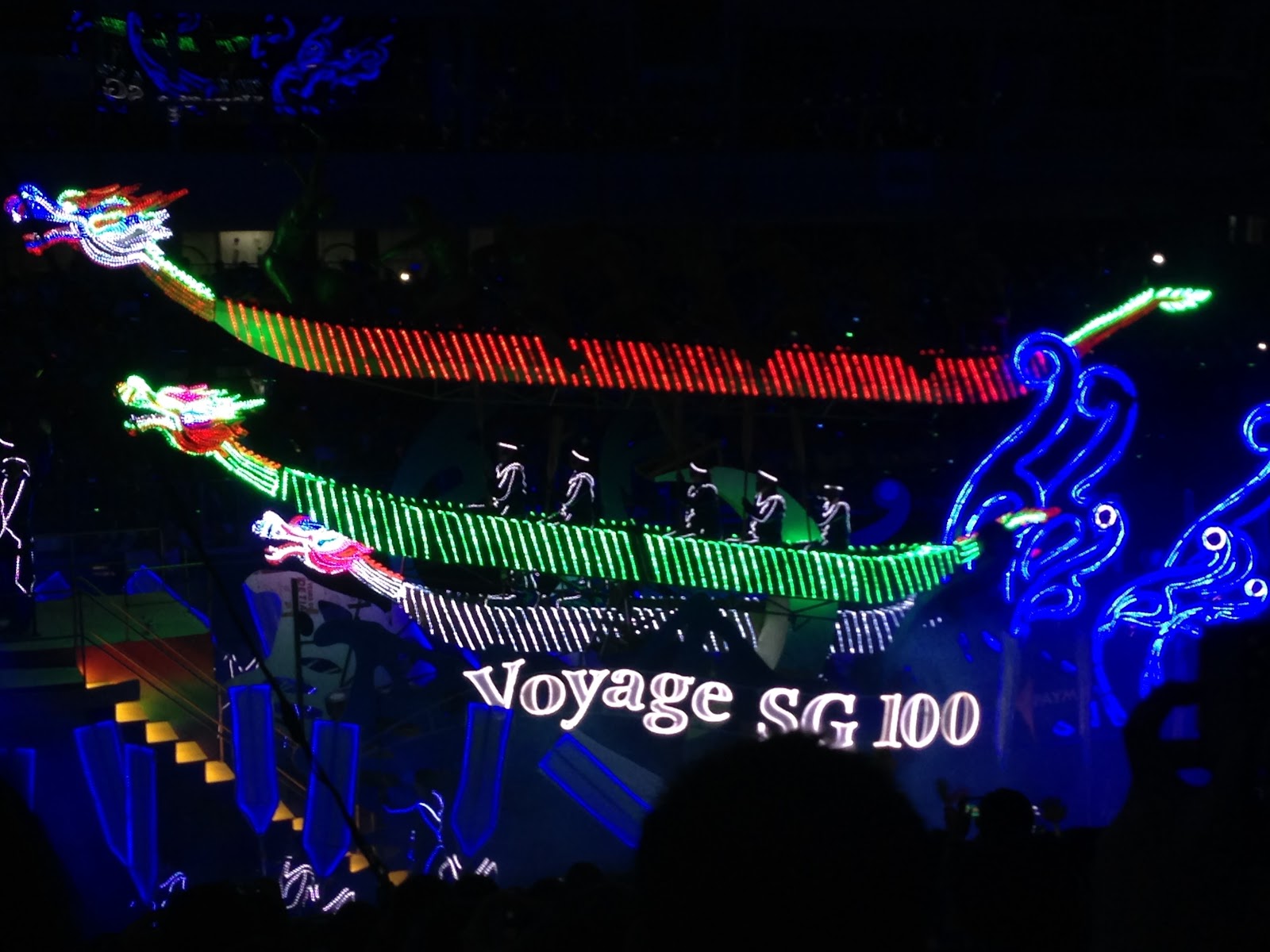 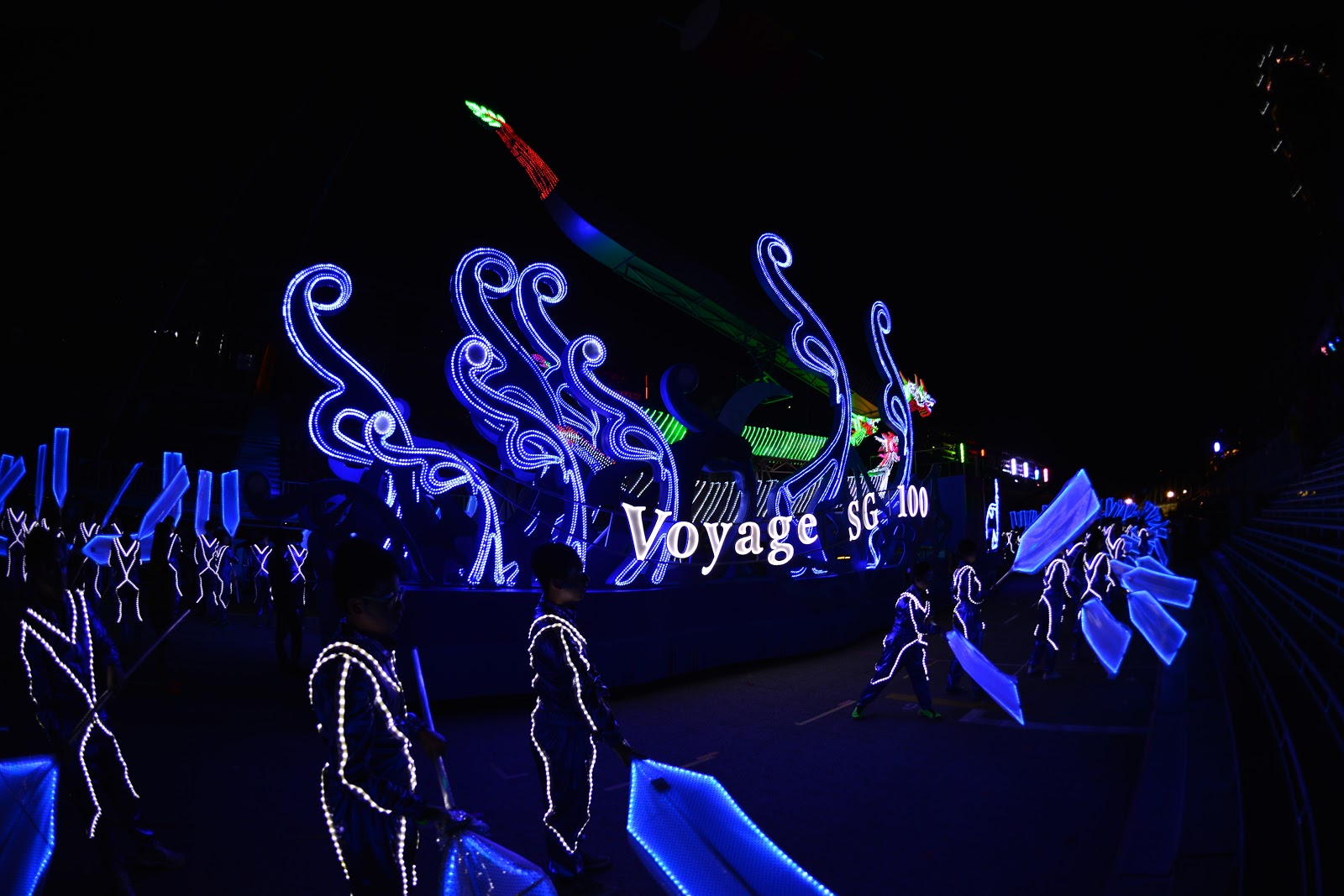
Grand Opening - Voyage SG100
|
The first Chingay parade in Singapore in 1973, with all its
noise and gaiety, was held to compensate for the ban on firecrackers, a
customary New Year practice to drive away evil spirits. Over the years, the
event became a unique multicultural performance, attracting many Malay and
Indian participant groups. The event captures the essence of the Singapore’s
unique cultural diversity, featuring floats, dancing dragons, and stilt
walkers. Gradually, the brightest talents from all over the world including Japan,
Russia, South Korea and USA shares the stage alongside our local stars in a
burst of exuberance with their performances.
It has become more international and has been compared to large street
parades held in other cities, such as the Mardi Gras parade in Brazil.
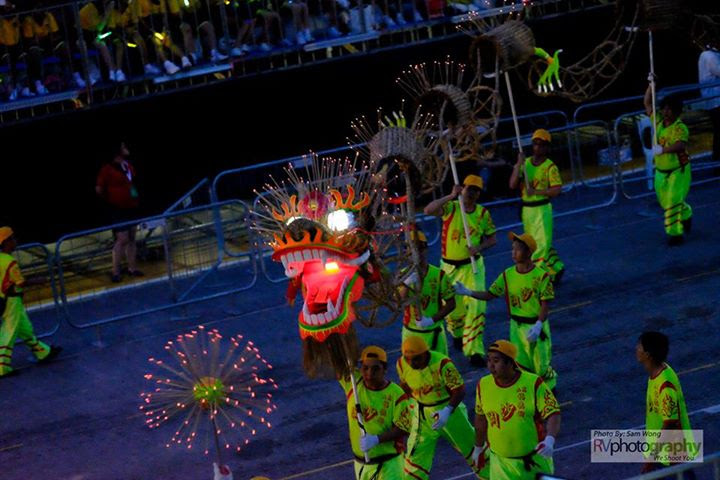
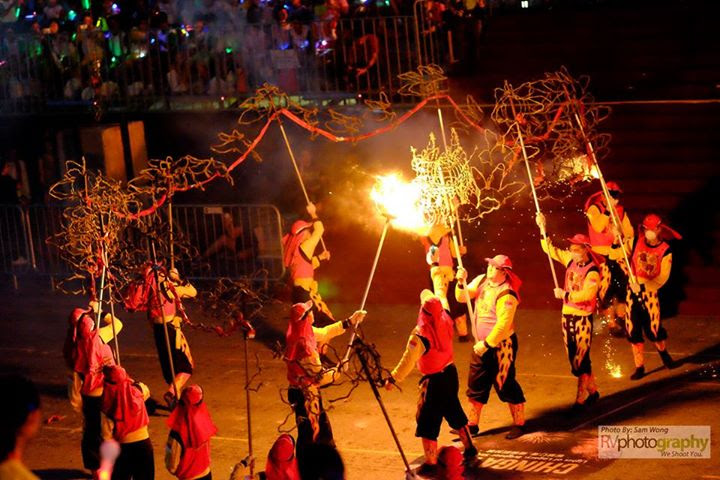
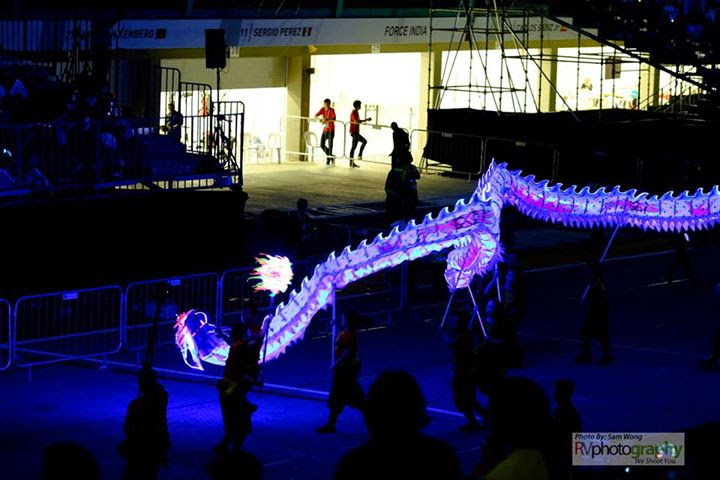
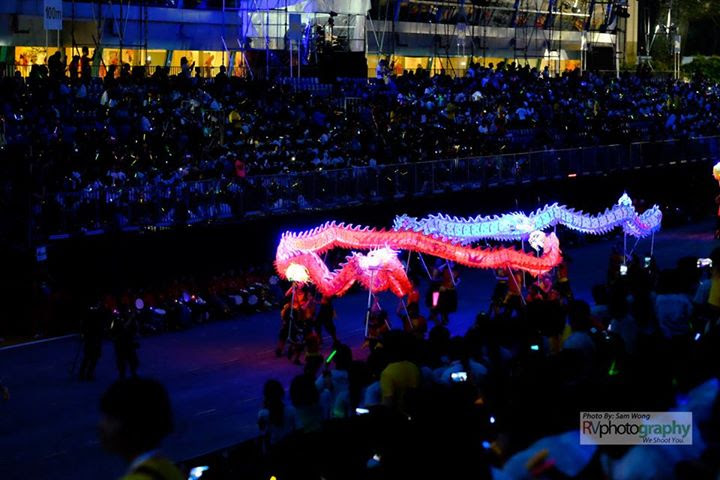
Dragon Dance Displays - Firecrackers & Fire Dragons, LED-lit Dragons,
Straw Fire Dragons, Flying Dragon from China
Friendship all over the World
Highlights of Chingay 2016 include stunning pole dances,
graceful ballerinas, cool hip hop dancers, boisterous Tambourine players with their
vivacious dance moves and infections beats, with children as young as five and
six grooving to the music. I am gratified to see people of all ages and races
coming together to put on their best performances.

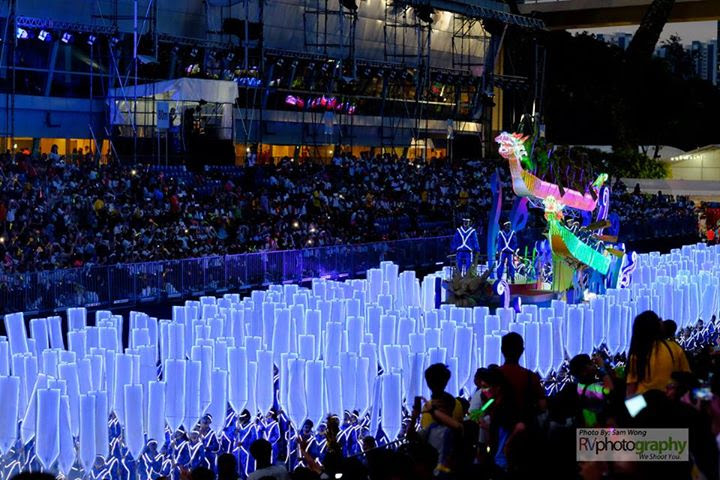
Voyage SG100 by the People's Association Youth Movement
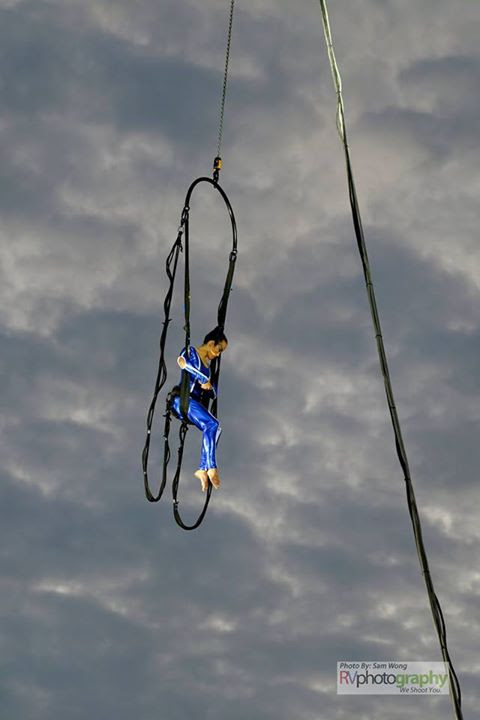
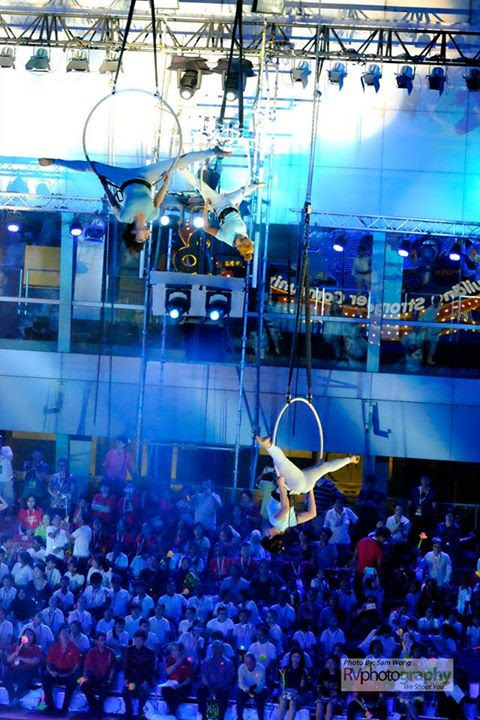
Aerial Performances
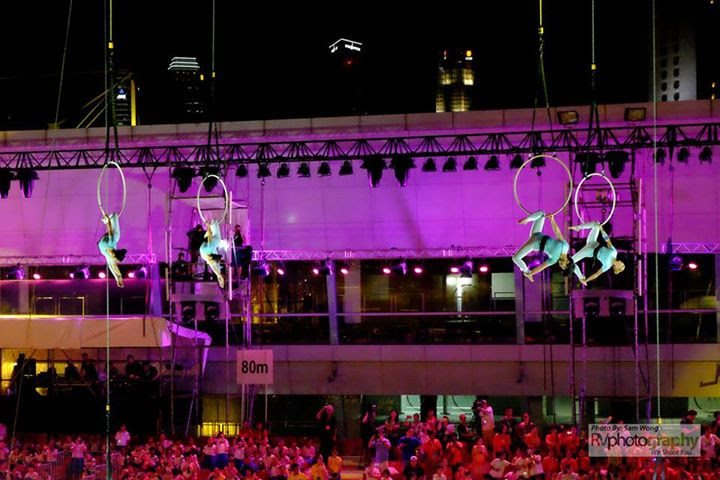
The performers done in colourful and elaborated multiracial
costumes, making it a spectacular sight to the audience. I was simply thrilled
by all the sights and sounds!
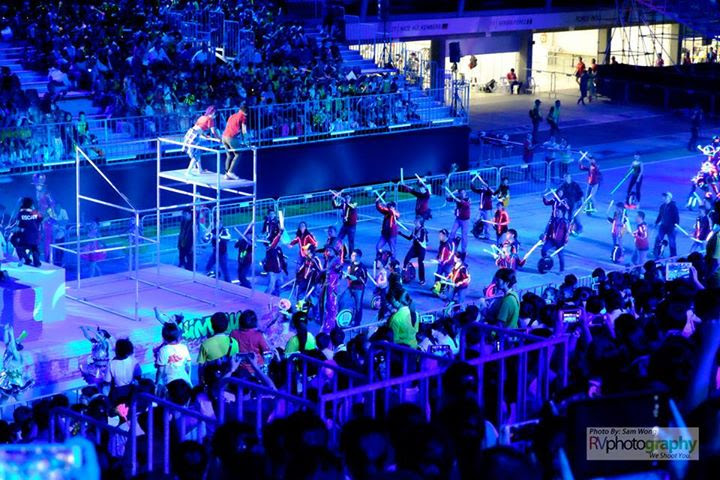
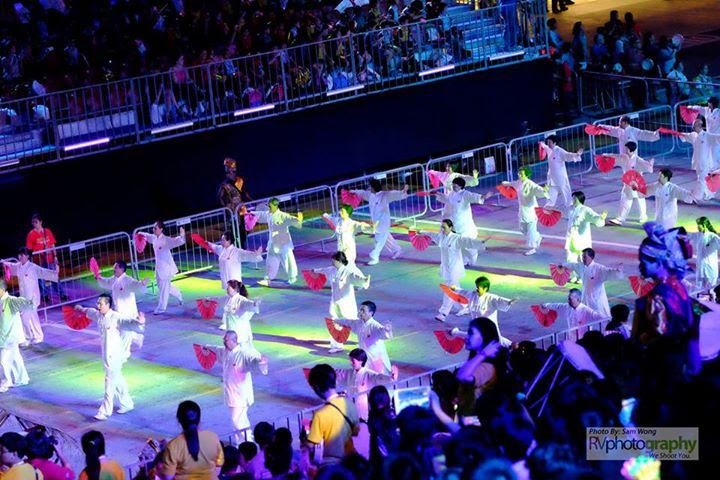
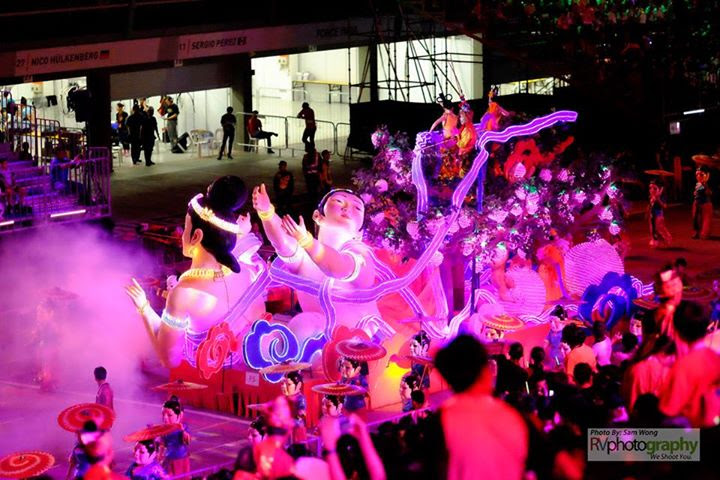
Performances from Different Ethnic Groups
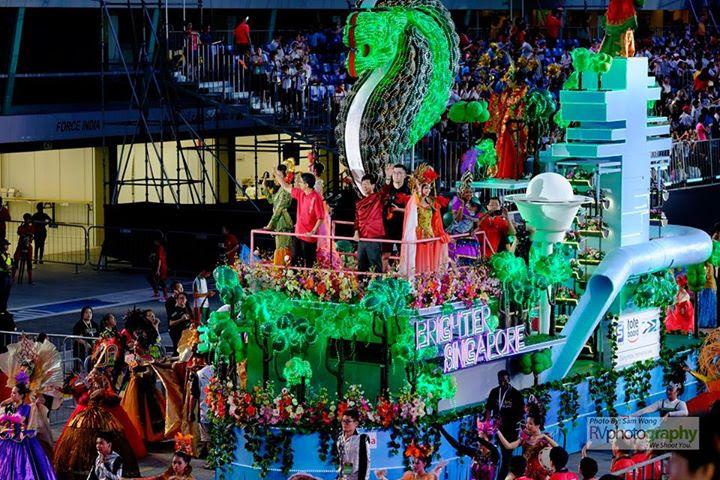
Because WE are Different, We are one
I believe that the main purpose of Chingay 2016 remains to
celebrate Chinese New Year and showcase multiracialism and multicultural
performances in Singapore. It is also held to promote Singapore as a tourist
destination as the Chingay parade has evolved into a tourist attraction that is
well known even outside Singapore. Finally, this year’s Chingay 2016 is a
pledge by all Singaporeans to pledge our support to live by our core values and
move forward together towards a brighter future Singapore! Judging from the
participants where 200,000 Singaporeans from all walks of life participated in
the parade, and attracted the best performers from all over the way, the
organizers have successfully fulfilled such purposes.
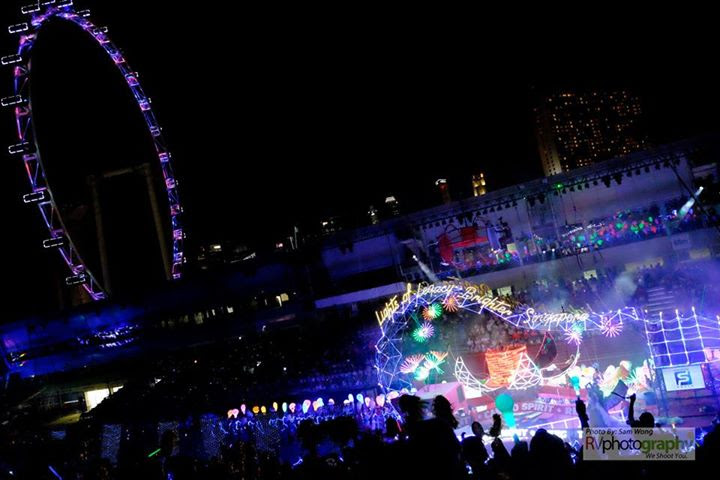 |
| Grand Finale - Lights Of Legacy |
Monday, 8 February 2016
Chingay 2016 reflection
On the 31st of January, our whole year two cohort was brought to a Chingay rehearsal.
We were also given a short talk about Chingay 2016 during that week's assembly CCE period.
As such, we were given these questions below to think about and discuss in this reflection post.
The photo album may be viewed here
Questions to ponder over:
1) What do you think the purpose of Chingay 2016 was?
2) How has this changed since the first Chingay and why do you think this change happened?
3) Do you think the organizers have successfully fulfilled this purpose?
1) What do you think the purpose of Chingay 2016 was?
Derived from: Source 1
From the PA organization:
Chingay 2016 aims to celebrate important core values advocated by then-Prime Minister Mr Lee Kuan Yew (resilience, prudence, passion, integrity and respect) as we take the first step towards SG100 in the form of the contingents and the many displays in the final segment 'Lights of Legacy, Brighter Singapore' and 'Voyage SG100'
From my own observations:
The Chingay Parade still retains its original purpose as a means of celebrating Chinese New Year with its noise and gaiety and the various float contingents. However, there is an added multi-cultural spark as not all the contingents performing were Chinese, and not all the performance items were tied to Chinese New Year, such as the Inter Religous Organization's contingents and the international Japanese contingent.
Only the float contingents that had their theme strongly advocated and the last segment of 'Lights of Legacy, Brighter Singapore' seemed to highlight what the organizer aims to celebrate.
However, I would argue that without the emcee's introduction of the last segment and what it aims to celebrate and the pre-Chingay talk, I would be pointless as to why there were performers carrying around Sky Lanterns with things drawn on them.
While some contingents are tied to Chinese New Year, to Chingay, to the theme, to the organizer (PAssion club and PAYM promoting their different hobby classes), I realise there are a few contingents not really tied to any theme at all, like the POSB contingent whose main aim was probably to let the audience know that they are one of the main sponsors of Chingay 2016.
2) How has this changed since the first Chingay and why do you think this change happened?
The first Chingay's aim was to make up for the ban of firecrackers with its noise, gaiety and various contingents.
The first change I observed were the multi racial performances involved, since there were a Malay Tambourine contingent formed completely of volunteers pre-parade and the very first contingent featured performers donning costumes from different races and two singers leading the audience to sing some kind of Chingay Song as well as stilt-walkers and acrobats. There was also this one contingent that featured two martial arts groups performing together.


Chingay has also expanded its scope to beyond Chinese New Year, since the organizors sought to celebrate the core values that late Minister Menthor Mr Lee Kuan Yew advocated and the hopes and dreams of Singaporeans of what Singapore will be in the next 50 years.
I also realized that there were some contingents formed of mainly students from secondary schools and even in contingents dominated by adults, I can still see one or two very young kids with them. One example was in the Malay Tambourine contingent when I noticed there was this extremely young boy among the tambourine players and the emcee mentioned that the youngest player in that contingent was 7 years old. Also worth mentioning is this very young boy (looks around 7-9 years old) performing in the a martial arts contingent.
I also observed that there were extremely old performers as well, such as these performers from overseas (emcees mentioned they were all old ladies) and this one old man on wheelchair in an Indian contingent dominated by adults.


This shows that throughout the years, Chingay performances has began to attract performers of different walks of life --- be it old or young, in whichever profession they may be. I also noticed that many of the motivators appear to be just a few years older than us, hence my assumption that they are students who've volunteered to be part of Chingay.

In my opinion, it is quite heartening to see these performers as this shows that not only the current working adult generation is playing their part through performances to keep the Chingay tradition alive, the younger generation also plays its part to ensure the continuation of the Chingay parade and through the participation of the older generation, its safe to conclude that the older generation are in the least, interested in Chingay Parade.

Another thing I observed was the contingent of international visitors --- Japanese performers, the European performers and the Russian performers, the last two which were not present on that day. To me, this shows that the Chingay Parade has become something of cultural importance, not just in Singapore but perhaps overseas, since these performers would've seen some significance in this parade to be willing to participate in it, even more so as Singapore isnt their native country.
In fact, given Singapore's multi-racial society, its possible to celebrate such a big event without sparking controversy for not including other races.
In 1987, Chingay featured its first foreign group when Singapore's main English newspaper, the Straits Times, sponsored four pop singers from Tokyo. Since then, Chingay has extended invitations to international artistes and troupes.
In my opinion, this is the organizer's attempt to 'globalize' Chingay, so that it remains not only culturally important on a local scale, but hopefully has some significance on a global scale. Hopefully, this will encourage international troupes to perform since Chingay is touted the largest costume parade in South East Asia.
The participation of volunteers of wider demographics is bound to happen as the parade becomes more inclusive since the contingents will require more and more performers yet there is a limited supply of willing adults and they will have to inevitably tap into the young and elderly demographics to get them to participate as well.
3) Do you think the organizers have successfully fulfilled this purpose?
I believe that the organizers have fulfilled their purpose of documenting down Singaporeans' hopes of what SG100 will be like in the form of Sky Lanterns and light cubes(not present that day), both of which were decorated by members of the public.
The organizers have also fulfilled their purpose showcasing of what's uniquely Singaporean-- our multi-racial, multi-religious society shown through the diverse costumes they wore, the groups of different religions performing together in the IRO contingent and the diversity in the performers and volunteers imply that we are an inclusive society, since youths are empowered to volunteer (the motivators) and the elderly are not left out (highlighted above) with a hint of the international through the international troupes and contingents to imply that Singapore isnt an enclose society but one open and globalized to the world.
Through the PAssion contingent that showcased people from different hobby classes (Hip hop, beat boxing, parkour, pole-dancing, ballet,etc), it would appear to any outsider that Singaporeans do have an outlet that they can further develop their interests in.

Picture credits: Wen Qi. Taken on the day itself.
2) How has this changed since the first Chingay and why do you think this change happened?
The first Chingay's aim was to make up for the ban of firecrackers with its noise, gaiety and various contingents.
The first change I observed were the multi racial performances involved, since there were a Malay Tambourine contingent formed completely of volunteers pre-parade and the very first contingent featured performers donning costumes from different races and two singers leading the audience to sing some kind of Chingay Song as well as stilt-walkers and acrobats. There was also this one contingent that featured two martial arts groups performing together.
Malay Tambourine Contingent
Performers donning costumes of different races
Two singers (one of them sings in Mandarin and the other in English) and two drummers on sky stage.
Contingent with two martial arts groups performing together.
In white is the Chinese martial art performers.
In black is the Malay martial art performers. The spotlight(green) is on a young Malay boy that will be mentioned later in the post.
Chingay has also expanded its scope to beyond Chinese New Year, since the organizors sought to celebrate the core values that late Minister Menthor Mr Lee Kuan Yew advocated and the hopes and dreams of Singaporeans of what Singapore will be in the next 50 years.
I also realized that there were some contingents formed of mainly students from secondary schools and even in contingents dominated by adults, I can still see one or two very young kids with them. One example was in the Malay Tambourine contingent when I noticed there was this extremely young boy among the tambourine players and the emcee mentioned that the youngest player in that contingent was 7 years old. Also worth mentioning is this very young boy (looks around 7-9 years old) performing in the a martial arts contingent.
I also observed that there were extremely old performers as well, such as these performers from overseas (emcees mentioned they were all old ladies) and this one old man on wheelchair in an Indian contingent dominated by adults.
Old ladies(mentioned by emcess) from Fujian, China in an IRO contingent.
Wheelchair bound old man (in green) in an Indian contingent.
This shows that throughout the years, Chingay performances has began to attract performers of different walks of life --- be it old or young, in whichever profession they may be. I also noticed that many of the motivators appear to be just a few years older than us, hence my assumption that they are students who've volunteered to be part of Chingay.
Motivators (those in yellow)
The motivator for our few rows (the guy in yellow without a cap) looks about to be just a few years older than us.
In my opinion, it is quite heartening to see these performers as this shows that not only the current working adult generation is playing their part through performances to keep the Chingay tradition alive, the younger generation also plays its part to ensure the continuation of the Chingay parade and through the participation of the older generation, its safe to conclude that the older generation are in the least, interested in Chingay Parade.
Japanese performers in a Japanese contingent.
Another thing I observed was the contingent of international visitors --- Japanese performers, the European performers and the Russian performers, the last two which were not present on that day. To me, this shows that the Chingay Parade has become something of cultural importance, not just in Singapore but perhaps overseas, since these performers would've seen some significance in this parade to be willing to participate in it, even more so as Singapore isnt their native country.
Why do these changes happen?
According to the official Chingay Website , Singapore took on a multicultural flavour in 1976. Since Singapore is a multi-racial society, I'd say that this is inevitable, since Chinese New Year's celebration is not exclusive to the Chinese, it's a celebration for everyone, regardless of their race.In fact, given Singapore's multi-racial society, its possible to celebrate such a big event without sparking controversy for not including other races.
In 1987, Chingay featured its first foreign group when Singapore's main English newspaper, the Straits Times, sponsored four pop singers from Tokyo. Since then, Chingay has extended invitations to international artistes and troupes.
In my opinion, this is the organizer's attempt to 'globalize' Chingay, so that it remains not only culturally important on a local scale, but hopefully has some significance on a global scale. Hopefully, this will encourage international troupes to perform since Chingay is touted the largest costume parade in South East Asia.
The participation of volunteers of wider demographics is bound to happen as the parade becomes more inclusive since the contingents will require more and more performers yet there is a limited supply of willing adults and they will have to inevitably tap into the young and elderly demographics to get them to participate as well.
3) Do you think the organizers have successfully fulfilled this purpose?
I believe that the organizers have fulfilled their purpose of documenting down Singaporeans' hopes of what SG100 will be like in the form of Sky Lanterns and light cubes(not present that day), both of which were decorated by members of the public.
The organizers have also fulfilled their purpose showcasing of what's uniquely Singaporean-- our multi-racial, multi-religious society shown through the diverse costumes they wore, the groups of different religions performing together in the IRO contingent and the diversity in the performers and volunteers imply that we are an inclusive society, since youths are empowered to volunteer (the motivators) and the elderly are not left out (highlighted above) with a hint of the international through the international troupes and contingents to imply that Singapore isnt an enclose society but one open and globalized to the world.
Through the PAssion contingent that showcased people from different hobby classes (Hip hop, beat boxing, parkour, pole-dancing, ballet,etc), it would appear to any outsider that Singaporeans do have an outlet that they can further develop their interests in.
Sky Lanterns (lit up)
As such, I firmly believe that the organizers have fulfilled their purpose to celebrate Chinese New Year-- Singapore-style while looking forward to what is to come in the next 50 years.Picture credits: Wen Qi. Taken on the day itself.
Tuesday, 2 February 2016
Does being rich bring you happiness?
I disagee that being rich can bring you happiness. Singapore is a rich country but it is also considered one of the most unhappy country, maybe because we complain about everything. Being rich only lets you buy whatever you want, but money cannot buy happiness. Moreover, the money mostly comes from people working so people probably have to work long hours to earn that kind of money, with less time to enjoy yourselves or spend time with your family. Happiness is only derived from you doing the things you like. But if you keep doing the things you like, the happiness will fade away. The best happiness is from the joy of others. If you got so much money, why not donate to charity. Seeing the joy of others can also fill you up with happiness.
I disagee that being rich can bring you happiness. Singapore is a rich country but it is also considered one of the most unhappy country, maybe because we complain about everything. Being rich only lets you buy whatever you want, but money cannot buy happiness. Moreover, the money mostly comes from people working so people probably have to work long hours to earn that kind of money, with less time to enjoy yourselves or spend time with your family. Happiness is only derived from you doing the things you like. But if you keep doing the things you like, the happiness will fade away. The best happiness is from the joy of others. If you got so much money, why not donate to charity. Seeing the joy of others can also fill you up with happiness.
Monday, 1 February 2016
The Extraordinary in the Ordinary

This picture shows a small garden near the greenhouse. As you can see, most of the plots are overrun by weeds and there are hardly any vegetables or other plants. You can probably infer from this that this is some garden that is not well taken care of.
But, although it is true the garden does not look tidy, the garden is just waiting for the Secondary 1 students to start planting vegetables and herbs and other flowers. This is part of the school Year 1 Values in Action (VIA) program. This program allows students to plant vegetables and herbs and raise them. We also try to decorate the garden with flowers and other decorations to spruce the garden up.
By the end of the program, the vegetables and herbs are sorted, packed and given to the elderly. Through this program, the students will also learn the sweat and blood sacrificed to plant the vegetables. The students also will appreciate the hardships and efforts of farmers who planted vegetables and fruits for us, when we just have to buy them in a comfortable environment.
This garden is like a teacher. It teaches the students appreciation, thoughtfulness and care through hardship. Many students have spent time and sweat raising the plants. The students will be more willing to help other people in need in other ways other being organised by school. On the outside, it looks likes a garden without any use. But used in a better way, you could help the others in need.
Being rich does not mean happiness as usually you would have to work for many hours away to earn much money and be rich. On top of that, you will have many responsibilities and things to do. Thus being rich would not be happy for you. But if you donate to charity and be sharing and caring, it might mean happiness. Rich kids are usually pampered so are thus selfish. There are many many millionaires are really stressed out. And some of them has even committed suicide due to depression. Happiness is about getting joy from giving. However, if you are rich and selfish you will not be happy.
Jolene - Prosperity vs Happiness
Being a prosperous country, are we a happy country? Unfortunately, the answer is no.
Singapore is relatively prosperous, having a GDP per capita of 57932, which is more than 1.2 times of the USA's, and a Happy Planet Index (HPI) score of 39.8 and ranks 90 out of 151 countries analysed.
On the other hand, China is less prosperous than Singapore, with a GDP per capita of 7559, which is one sixth of the USA's, but has a HPI score of 44.7 and ranks 60 out of 151 countries analysed.
The above data from www.happyplanetindex.org shows that Singapore is more prosperous, but less happy than China. Thus, it can be concluded that prosperity does not define happiness in a country.
However, the HPI is calculated from the experienced well-being, life expectancy and ecological footprint of a country. Singapore has a high ranking for experienced well-being and life expectancy but low ranking for ecological footprint, whereas China has a low ranking for experienced well-being and a middling ranking for life expectancy and ecological footprint. The data for the HPI of Singapore could have been affected by the extreme ranking of the ecological footprint, resulting in an overall lower HPI than China. Therefore, the data may not be as accurate or reliable due to the extreme ranking. Moreover, happiness cannot be defined by just a set of numbers and data.
Many people believe that being rich is the key to a better life. However, the key to a better life is happiness. While it is certainly true that money can help us to achieve our goals, provide for our future and make life more comfortable, it may not necessary guarantee happiness. Having lots of money to indulge in nice things and go on holidays do bring happiness but if wealthy people have no family or friends because they have been too busy making money, they may end up having nothing to spend it on. As a result, being rich in this case is a miserable as the poor who have no money to spend. In conclusion, the stresses of poverty and financial difficulty do make one unhappy, but being happy does not guarantee happiness.
Does being rich means happy? -- A post about Poverty.
Sites suggested by the worksheet:
Human Development Reports (UN Development Program) | China |Singapore
Happy Planet Index
Does being rich means happy? Societal point of view-- Singapore and China
Singapore
I do believe that Singaporeans are happy, more or less, with their lives despite our constant complaining. The government has done a lot for our population-- from incentives to give birth to more children, to EduSave scholarships and subsidies, HDB subsidies for first time buyers, single parents and low income families to MediSave, MediShield and even more Pioneer generation packages for our Pioneer generation-- I do believe that they've tried their best to be inclusive to Singaporeans of all demographics and income groups. However, this might largely be an assumption.
While we (as Singaporeans from an individual perspective) cannot/ do not often see homeless people sleeping at void decks or other public spaces and other signs of poverty, it does not mean that poverty, whether abject or absolute is absent.
It's safe to assume that poverty is present, but is happiness absent in those experiencing poverty?
Despite the government's efforts to include everyone in their schemes while preventing us from becoming a welfare state, there will still be a certain group or some people left out. However, looking at how abundant an average Singaporean's life is (our life expectancy is 83 years old, our homicidal rates are 0.2 per 100,000 people and we have the resources to 'produce' 4.3 tonnes of carbon dioxide emissions per capita), I doubt that Singaporeans lead unhappy lives.
The aforementioned numbers may just be statistics, but I see them as a rough indicator of our country's happiness.
We can and are generally able to afford the healthcare to live up to 83 years old, meaning that we have plenty of time to grow old and enjoy our retirement years, even though this may just be an assumption.
Our homicidal rates are 0.2 per 100,000 people, which means that Singapore is a generally safe country. This also means that the population doesnt have to live in constant fear that their lives will be endangered, thereby implying that their lives would be more fulfilling.
Our carbon dioxide emissions of 4.3 tonnes per capita has another implication-- that we are able to afford those carbon dioxide emission appliances-- from televisions to cars to fridges to laptops. These are probably things we take for granted but they indicate that we are at a certain level of wealth to be able to afford them.
From the above statistics, it does seem to imply that since Singapore is a relatively rich and prosperous place, we would be happy and fulfilled.
This is contradicted by our constant complaints and also our 'kiasu-ness', the constant need to outperform to the point of placing too much pressure on ourselves (or our children, from an adult's stand)
While we live in a safe and enjoy the many joys of life such as turning on our electronic appliances and relative water security, the stresses we constantly face at work, school, or in Singapore's competitve society, does take away a lot of our happiness.
However, from an individual's perspective, i'll have to argue that it is ultimately one's mindset that determines how happy we are. Singaporeans are often criticized of being too uptight and strict, and i do have fair reason to believe that if we 'let loose' a bit (without breaking the law, of course), Singaporeans will be happier. Ultimately, it is what we define as happiness and our mindset that determines how happy we are. For example, a student that prioritizes results will be happy upon hearing that he or she has obtained the desired result, while a homeless person would define happiness as having a roof over their head and going to sleep with a full stomach.
Therefore, I would like to conclude that while being rich may open opportunities to things that may make us happy and enable us to enjoy life, we are still susceptible to stresses in life (a point very true from a Singaporean student's perspective) which may rob us of our happiness.
China
China, on the other hand, has a largely different demographic from Singapore.
Their life expectancy is 75.8 years, while their expected years of schooling is 13.1 (a stark contrast to Singapore's 15.9 years) and their homicide rate is 1 per 100,000 people (very much larger than Singapore's homicidal rate) and their carbon dioxide emissions are 6.7 tonnes per capita.
China has experienced large economic and industrial growth in the recent decades and more will be expected of China in the years to come.
However, from a societal point of view, I would like to argue that not all the cities are progressing or 'modernizing' at the same rate. China is so large and vast that it'd be nearly impossible for a small rural village to be on par (economic or social) with large cities like Beijing and Shanghai. Therefore, taking into the consideration of some especially rural and poor states/provinces in China, it's possible to conclude that China is progressing, even though the some of it will have a harder time catching up than some. Please do note that this is based on an assumption that there are rural and poor villages in China.
China is also a highly competitive society, where the students are highly expected to do well, work hard and get a high-earning job in order to raise their elderly parents, since most of the students are only child(s) and therefore their parent's only pillar of support after they retire. (This isnt very true for the minority tribes, which are able to have more than one child and some villages that depend on manual labour to toil their land and thus earn a livelihood. For the villages, I heard that if the first child is a female, the family is permitted to have a second child.) This is based off personal accounts and observations from my cousins in Shanghai and therefore, there are many underlying assumptions in this.
Due to the large gap from the large cities (Beijing, Shanghai, Shen Zhen, etc) and small rural villages, there are often large gaps in education standards and also rates of crime. I have heard of several accounts of child kidnappings and trafficking in China, but i do not know how true these are. Still, from a societal perspective, I take the stand that when a person has a higher education, he or she is less likely to turn to a life of petty crime or murder, since the education may enable them to find a slightly higher-paying jobs. This is based on the assumption that well-educated people are less likely to endanger the lives of others, however, this is not true all the time.
This also means that in China, some may have to live with the constant fear of child kidnapping, murder, and the like. In these situations, these people may not be very happy, since the threat is mostly present. This is also worsened by the police's inability to track down missing children or be able to crack homicidal cases due to how large China is and how vast the population of a city might be, leading to even more fear and mistrust, since neglected cases mostly goes unsolved and leaves trauma to the victims' families. This is based on the assumption that the police wouldnt crack homicide cases, which may be largely untrue.
Their carbon dioxide emissions are 6.7 tonnes per capita, which may imply that they aren't very efficient with their fuel emissions (Beijing has their smog to prove this).
Higher carbon dioxide emissions and being inefficient in managing the emissions and would lead to air pollution, which is prevalent in large cities. This is based on the assumption that carbon dioxide emissions would lead to air pollution. Air pollution is damaging to the health of the people who live in the cities, especially the young children and the elderly. It is to be expected that this would be a cause for concern in many parents, which would take away some of their happiness.
However, from an individual's perspective, happiness is subjective and therefore hard to define, since it largely depends on one's definition of happiness and in extension, one's mindset and what the person values in life.
Conclusion:
In conclusion, while being rich may change what makes us happy, happiness is ultimately determined by ourselves, even though these statistics may be a rough gauge of how happy one might be in a certain country, be it Singapore or China. These two countries, while sharing many similarities, still have differences and will have largely different problems to deal with, and in extension, people in these two countries will have largely different things to worry about and largely different things to be happy about.
Subscribe to:
Posts (Atom)